
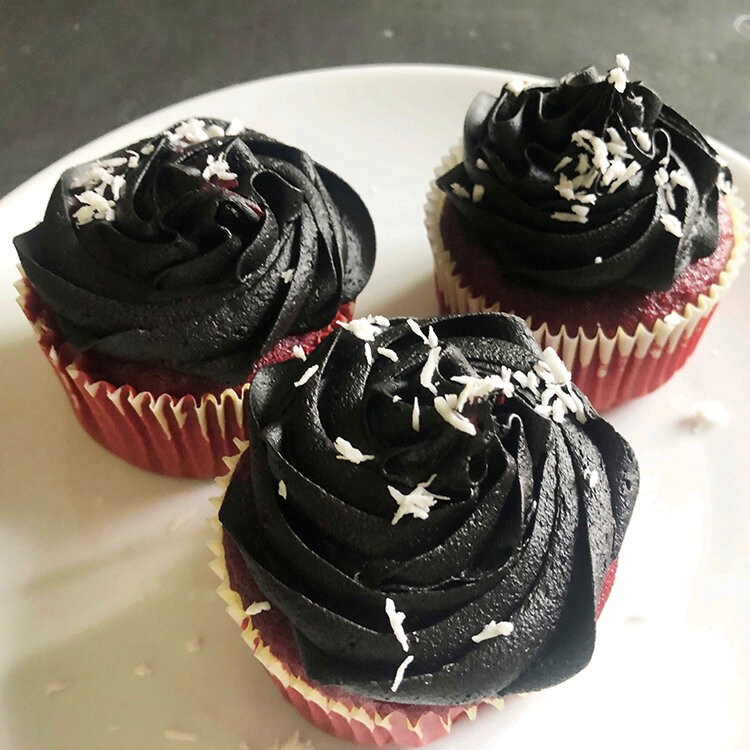
Black sounds like the simplest possible color brief. There is no debate about whether it should lean towards strawberry red or lemon yellow. The instruction appears obvious: make the product black.
In food development, however, black can be surprisingly demanding. A formulation may stop at dark grey, carry an unwanted undertone or look different once it is spread, diluted or viewed under stronger light. Achieving visual depth therefore depends on the food underneath the color as much as the coloring ingredient itself.
Look at the Base Before Trying to Darken It
Start with an uncolored sample of the complete recipe.
A white frosting, brown baked product and beige snack coating are very different starting points. The existing color influences how much work an added coloring system has to do and what the final shade looks like.
This is particularly important when comparing development samples. Keep the original base beside them rather than relying on memory of how light or dark it was before color was added.
Decide Whether You Need Black or Nearly Black
A dramatic jet-black appearance is not necessary for every product.
Some applications look better with charcoal, graphite or another softer dark tone. Agreeing on that target early can prevent repeated adjustments aimed at making a product darker when it has already reached the appearance the brand actually needs.
When evaluating dark shades from Natural Food Color Suppliers, use a physical reference where practical. Words such as “deep black” can mean surprisingly different things to different people.
Check for Undertones in the Real Food
A dark sample may appear black at first glance but reveal another tone when spread thinly or viewed under bright light.
The recipe itself can contribute to this. Cocoa, fruit ingredients, spices or naturally yellow components may influence the final visual impression.
Developers should therefore test the color inside the complete formulation rather than judging it only in a simple carrier. What looks neutral in one system may behave differently when another ingredient contributes its own color.
More Color Is Not Always the First Answer
A trial that appears grey may tempt the development team to increase dosage immediately.
Before doing so, check the rest of the batch. Was the mixing sequence the same? Did an ingredient change? Was dispersion complete? Are the two samples subjected to similar lighting?
When buying natural food coloring wholesale, visual depth needs to be assessed alongside the product and process. Increasing the amount without understanding the reason for the weak result can create unnecessary formulation changes.
Look at the Product in Its Final Shape
A thick cup of icing may appear darker than the same icing spread in a thin layer. A beverage viewed in a large container may look different after it is poured into its final package.
Evaluate the product in the form the customer will actually encounter.
For confectionery, that could mean examining individual finished pieces. For coatings or bakery applications, it may mean applying the normal layer thickness before judging the shade.
The laboratory container should not become the final color standard by accident.
Let Processing Finish Before Judging
Heating, cooling and other production stages may affect the finished appearance.
If the product is baked, cooked or otherwise processed, carry the color through those conditions before approving it. Make notes about dosage and ingredient order so the trial can be repeated later.
A color that reaches the target only before processing has not yet solved the commercial formulation problem.
Remember the Package
Dark products can create interesting packaging decisions. A black food seen through clear material may look different from the same product against a printed or opaque background.
Review the color in proposed packaging during development where possible. Shelf-life observations should include appearance as well.
The customer judges the product after distribution and storage, not while it is fresh beside the development mixer.
Conclusion
Developing black food is less like switching off a light and more like building visual depth layer by layer. The base color, thickness of the finished product, processing and even its package can determine whether the result reads as black, grey or something in between.
That makes the final product the most useful color reference of all. Formulation teams exploring naturally derived dark shades can review relevant solutions through foodrgb.com and then judge them in the exact form, recipe and package that customers will eventually see.
