
Why voice support breaks down in the first place
Many businesses don’t suffer from a lack of customers—they suffer from a lack of capacity. During peak hours, calls pile up, wait times climb, and customers experience the same repeated questions across different agents. ai call center software That churn creates a cycle where staff spend more time searching for answers than resolving issues. The result is inconsistent service quality and frustration that can erode trust quickly.
Traditional call centers also struggle to capture and reuse context across channels. A customer may start with a voicemail, move to email, and then call again with a slightly different problem, and the organization has to rebuild the situation from scratch. Add compliance requirements, call recording rules, and handoff procedures, and the process becomes even heavier. When escalation pathways are unclear, teams end up transferring calls unnecessarily, which increases both cost and resolution time.
How an AI-driven contact workflow solves the problem
An AI-assisted voice system can intercept calls at the right moment and guide callers to clear outcomes. Instead of forcing every customer to repeat information, the voice agent can ask targeted questions, summarize the request, and route the conversation ai outbound calling based on intent. This reduces the number of transfers while improving first-contact resolution. With automation in place, common issues like appointment scheduling, order status checks, and policy explanations can be handled consistently.
For outbound efforts, an AI voice layer can also improve how conversations begin. If leads are being contacted with manual scripts, the outreach often lacks personalization and struggles to adapt in real time. That adaptability improves conversion rates while keeping the experience smooth for the person on the other end.
Implementation that avoids complex setup and operational drag
A major concern is deployment effort, especially when teams are already managing telephony, CRM tools, and support workflows. Modern contact automation platforms are designed to integrate quickly so businesses can start testing without months of re-architecture. Instead of building from scratch, operators can configure conversational goals, escalation rules, and operating hours with straightforward controls. That means the business can validate outcomes and tune responses as quickly as real usage demands.
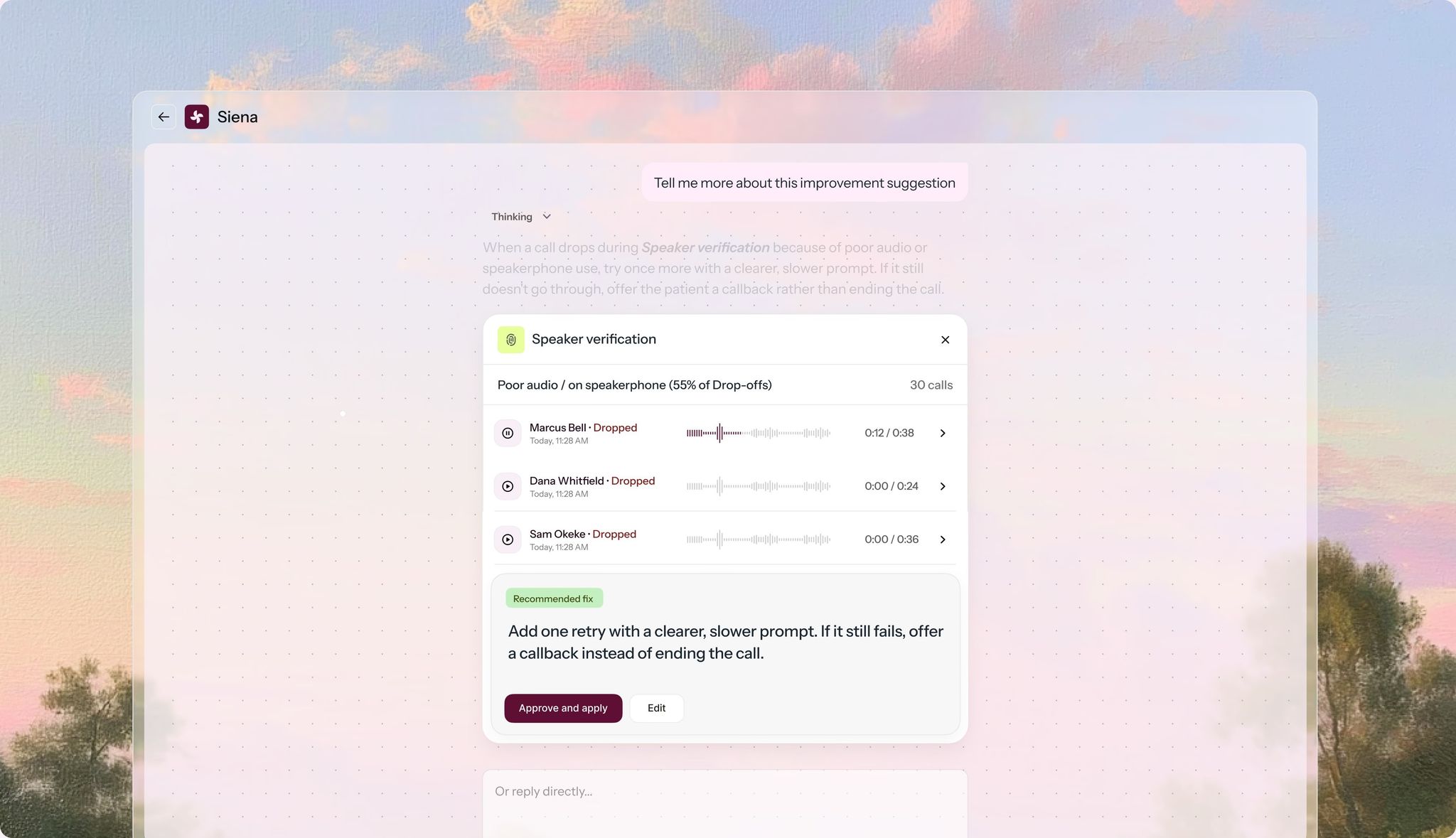
Quality control and visibility are also essential. An effective AI voice solution should support monitoring, conversation insights, and clear pathways for human takeover. When the AI detects uncertainty or a complex edge case, it can hand off to a qualified agent with relevant context included. This keeps the customer moving forward while preventing knowledge loss and reducing agent workload. Over time, teams can refine prompts and routing logic based on measurable performance signals.
Conclusion
When call volumes rise and customer expectations increase, the bottleneck is rarely a lack of effort—it’s a lack of scalable automation. The practical payoff is a smoother experience for customers and a lighter load for support teams, without sacrificing control or oversight. Harmony is built to streamline voice interactions with intelligent automation that avoids complex setup and traditional call center overhead. With harmony.ai, teams can deploy voice agents quickly, automate repetitive steps, and deliver responsive communication that matches real customer needs. If your organization wants fewer dropped calls, faster resolutions, and more predictable outcomes, this approach offers a clear path forward through measurable, conversational improvements.

2 comments
Local SEO really benefits from a focused approach to technical and content fundamentals. If you’re working on local visibility, it helps to align your site structure, on-page signals, and business details so search engines can confidently connect your pages with nearby intent. A solid Peak SEO strategy can also support
Choosing the right partner for CRM software development services starts with clarifying your sales and support workflows, integrations needed, and data migration scope. I found it helpful to ask whether the team can design role-based dashboards, automate lead-to-opportunity stages, and ensure secure access controls. Also, check for customization depth, API